Tips for Reading Cancer News


Groundbreaking. Game-changing. Promising. These are just some of the words often seen in media coverage of new cancer treatments. But how does a reader or viewer know what’s really groundbreaking and what’s just hype?

Below you will find three articles that explore challenges health care reporters face and biases that can affect what is covered and how.

We’ve also provided five articles that provide tips on how to read health news and how to spot misleading news coverage.

And don’t miss the link to FORCE’s XRAY–Behind the Metastatic Breast Cancer Headlines. XRAY: MBC reviews and rates articles about metastatic breast cancer.

Challenges health care reporters face:

Tips on how to read health news:

What Do Drug Names Mean?

Have you ever wondered: How did trastuzumab (Herceptin) get its name? Or why is the biosimilar for Herceptin called trastuzumab-anns (Kanjinti)?

As the articles below explain, the names of cancer drugs are driven by science and advertising. Each new drug starts off with a name comprised of letters or numbers that means something only to the company that created it. If studies show that the drug is beneficial, and if it is approved by the FDA, it will get a generic name and a brand name. The generic name will contain clues to how the drug works or if it is a biosimilar. Brand names will be chosen based on what companies hope to portray, and what the FDA will allow.

Read on to learn more about the art and science of how drugs get their names.

And for a refresher on biosimilars, check out this past issue of MTT.

Diagnosing & Treatment of Bone Metastases

When breast cancer spreads, one of the first sites it often goes to is bone. The articles below discuss diagnosis and treatment of bone metastases.

Bone metastases, like other types of metastases, are often treated with systemic treatments, such as chemotherapy, hormone therapy (if your cancer is estrogen or progesterone receptor-positive), targeted therapies, and bone-strengthening drugs. Radiation may also be used to treat certain metastatic sites.

Symptoms and Diagnosis of Bone Metastases

Treatment Options For Bone Metastases

What is a Tumor Agnostic Therapy?

In May 2017, the U.S. Food and Drug Administration (FDA) approved the first tumor/tissue agnostic therapy. These drugs are approved for use for any tumor that has a specific mutation, regardless of where the tumor started. Since then, two more tumor/tissue agnostic therapies have been approved. The drugs that have been approved are:

 Pembrolizumab (Keytruda®), for metastatic cancers that have microsatellite instability-high (MSI-H) or DNA mismatch repair deficiency (dMMR). It is rare in breast cancer.
Larotrectinib (Vitrakvi®) and Entrectinib (Rozlytrek®), for metastatic cancers that have certain NTRK gene mutations. These mutations are found in about 2% of breast cancers.

Although these mutations aren’t common in breast cancer, more tumor/tissue agnostic therapies are in clinical trials which could potentially expand breast cancer treatment options.

Below you can learn more about the drugs that have been approved and how these tumor/tissue agnostic therapies are pushing the field of precision medicine forward. These drugs are often studied in basket trials, which enroll patients with many different types of cancer that all share a common mutation. You can read more about basket trials from BreastCancerTrials.org: All Open Basket Trials

Overview of Tumor Agnostic Therapy:

Tumor Agnostic Therapies:

True or False?

2% of breast cancer patients are diagnosed initially with stage IV metastatic disease.


Answer: False

Between 6-10% of breast cancer patients are diagnosed initially with stage IV metastatic disease. This is called “de novo” metastatic breast cancer.

You can learn more about de novo metastatic breast cancer here: https://www.ncbi.nlm.nih.gov/pmc/articles/PMC5905205/

You can find personal stories from women diagnosed de novo on MTT here: https://breastcancertrialtalk.org/2018/12/01/personal-stories-6/

What Are Inclusion and Exclusion Criteria?

Together called eligibility criteria, inclusion and exclusion criteria outline who can and cannot participate in a trial. This month we share why these criteria are important, as well as about current challenges and efforts to optimize eligibility criteria.

Dragon Boat Racing

Up until the late 1990s, women who had been diagnosed with breast cancer were told not to take part in upper body exercise. The concern: it would increase their risk for lymphedema. Then, the results of a study that enrolled women in an exercise and dragon boat racing program found that upper body exercise helped reduce lymphedema risk. Since then, many women with early-stage and metastatic breast cancer have taken up the sport. There are now 225 teams in 25 countries.

Below you will find links to articles about breast cancer and dragon boat racing, the study that showed dragon boat racing improved quality of life, a documentary that aired on local PBS channels, and the International Breast Cancer Paddler’s website and Facebook page–in case you want to learn how to get involved.

Genetic vs. Genomic Testing

The terms genetic testing and genomic testing are often used in articles about cancer research. They sound similar, but they are not the same.

Below are a collection of articles and one video that can help you understand the differences between genetic testing, which refers to the genes you have inherited, and genomic testing, which refers to the testing of the tumor.

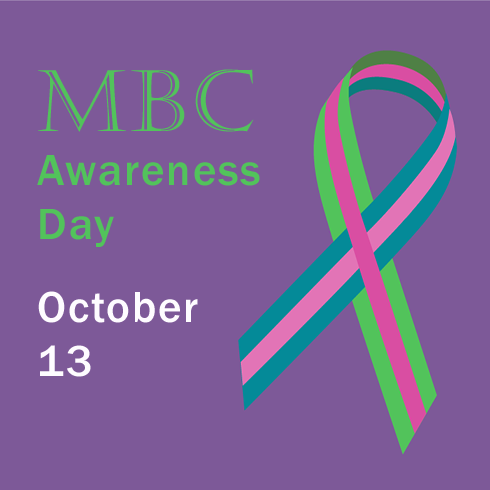
About MBC Awareness Day

In 2009, October 13 was established as Metastatic Breast Cancer Awareness Day.

Breast Cancer Awareness Month had been on the national calendar since 1985. But its focus was primarily screening and diagnosis. All too often, women and men with metastatic breast cancer were pushed to the margins or felt completely invisible. MBC Awareness Day ensures this doesn’t happen.

Of course, improving awareness and understanding of metastatic breast cancer should not be limited to one day or one month. But October does create an opportunity to move the conversation from detecting breast cancer to living with MBC.

The Metastatic Breast Cancer Network has created “A Fact A Day” with information you can share via social media to help create awareness of MBC. Read more about the history of metastatic breast cancer awareness day and learn how you can take part: